If you've searched "what is the 90% rule in trading?", you've probably seen different answers. That's because there isn't one official rule -"90% rule" is trader shorthand that gets applied to a few ideas. Some are useful, one is a myth, and all point to the same message: manage risk, track data, and stick to a process.
In this guide we unpack the three most common meanings, show what's true (and what isn't), and give you a simple, actionable framework you can start applying today -ideally while journaling your trading journey in GASPNTRADER.
What Is the 90% Rule in Trading?
The term "90% rule in trading" usually refers to one of three ideas:
1) The 90-90-90 Rule (Beginner Attrition)
Claim: 90% of new traders lose 90% of their capital within 90 days.
Reality: It's an anecdotal warning, not a scientific law. Still, broker disclosures often show a majority of retail traders lose money, especially early on. The takeaway isn't doom -it's that under-prepared traders who over-risk tend to churn out quickly.
Where does it come from? Honestly: nobody can point to a source. There is no published study behind the 90-90-90 rule -it's an industry adage passed around trading floors, forums, and prop-firm onboarding talks. Each "90" is shorthand:
- 90% of traders -the share of beginners said to fail
- 90% of their capital -how much of the account they're said to burn
- 90 days -how fast it's said to happen
The numbers are memorable, not measured. The adage survives anyway because it rhymes with something verifiable: regulated brokers in many jurisdictions must disclose what share of retail accounts lose money, and those disclosures consistently show a majority losing. The saying compresses that reality into something sticky -which is also why traders search for it worldwide, in many languages, under every spelling of "90-90-90". The experience behind it (early blow-ups) is universal even if the exact figures aren't.
Why it persists
- Overconfidence & impulse trading
- Oversized positions relative to account size
- No written plan or journal, so mistakes repeat
How to use it
- Treat 90 days as an apprenticeship phase focused on risk controls, not fast profits.
- Cap risk per trade (e.g., 0.25%-1.00%) and set a daily loss limit (e.g., 1-2%).
- Journal every trade to find patterns you can fix.
2) "90% of Options Expire Worthless" (Options Myth)
Claim: 90% of options expire worthless -so just sell options and win most of the time.
Reality: This is a myth. A large share of options are closed or rolled before expiration. "Worthless at expiration" ≠ "losing trade" for buyers, and high win rate for sellers can hide tail risk (rare but large losses).
Where the number goes wrong: the claim quietly conflates all options ever written with the subset actually held to expiration. Most contracts never reach expiry at all -they're closed, exercised, or rolled along the way. Of the leftover subset that is carried to the final bell, a large share do expire worthless -but that's a statement about leftovers, not about the odds of any strategy. And even a worthless expiry says little about P&L: the buyer may have already taken profit on part of the position or used the option as a hedge that did its job, while the seller may have eaten mark-to-market pain and margin stress for weeks before "winning" at expiry.
How to use it
- If you sell options, manage tail risk: defined risk structures (spreads), hedges, and strict stop/adjust rules.
- Judge strategies by expectancy and max drawdown, not just win rate.
3) The 90/10 (Pareto-Style) Outcome Skew
Idea: A minority of trades (or time windows) can generate the majority of P&L -sometimes expressed as "90% of profits come from 10% of trades."
Reality: It's not a fixed ratio, but it's directionally true for many systems: a few big winners or rare regime periods carry the curve.
How to use it
- Protect capital through flat/quiet periods so you're around for the outlier moves.
- Let winners run within plan; cut losers fast.

The 90% Rule in Stocks, Options, and Forex
The adage travels across markets, but it gets applied a little differently in each:
In stocks, the "90% rule" almost always means beginner attrition among active traders -people day trading or swing trading individual names, not buy-and-hold investors. The adage targets short-horizon, decision-heavy trading, where every session gives an unmanaged process another chance to compound mistakes -more decisions per week means faster feedback, in both directions.
In options, the phrase usually mutates into the "90% of options expire worthless" claim covered above. Options add leverage and time decay, so both failure modes get amplified: buyers of cheap short-dated contracts can bleed out quickly, while sellers can ride a flattering win rate straight into one outsized loss.
In forex, the adage gets quoted most aggressively because high leverage compresses the timeline: the oversized position that would dent a stock account over months can empty a leveraged forex account in weeks. This is also where broker risk disclosures ("X% of retail accounts lose money") are most visible, which keeps the saying alive.
The common thread: the market doesn't change the rule -leverage and trade frequency change the speed. The defense is identical everywhere: fixed risk per trade, deliberate position sizing, and a journal that tells you what's actually working.
Why the "90% Rule" Matters (Even If It Isn't a Law)
- It spotlights survivorship: the market punishes over-sizing and under-preparing.
- It nudges you toward process over prediction.
- It encourages measuring expectancy and drawdown -the real drivers of staying power.
A Practical Framework: Turn "90% Rule" Into Edge
1) Define Risk First
- Risk per trade: 0.25%-1.00% of equity.
- Daily stop: 1-2% of equity or -2R, whichever hits first.
- Weekly stop: If you hit daily stop twice in a week, reduce size by 50% next week.
Why so conservative? Because drawdown recovery is asymmetric: lose 10% and you need about +11.1% to get back to even; lose 25% and you need +33.3%; lose 50% and you need +100%. The deeper the hole, the disproportionately harder the climb -that asymmetry is exactly how the "90% of capital" part of the adage happens in practice. You can run your own numbers in the max drawdown calculator.
2) Position Sizing That Survives
- Use volatility-based size (e.g., ATR) so your stop is outside noise.
- Keep correlated positions from stacking (treat them as one big bet).
- If you've never formalized this, fix your risk per trade (usually 1-2% of your account) and size every position so the loss at your stop stays inside that budget -the 3-5-7 rule is a simple framework for it.
3) Trade Only Your A-Setups
- Pre-define entry, stop, target and invalidations.
- Require confluence (trend + level + trigger). No confluence? No trade.
4) Track Expectancy (Not Just Win Rate)
Expectancy formula:
E = WinRate × AvgWin − (1 − WinRate) × AvgLoss
- A system with 40% win rate can be excellent if AvgWin is ≥ 1.8× AvgLoss.
- Journal actual R-multiples to see whether the math works in your hands.
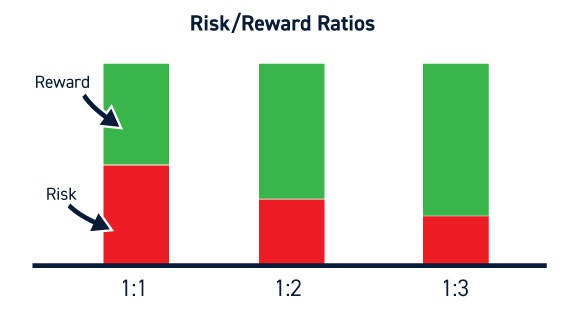
There's a clean shortcut hiding in that formula: at a fixed risk-reward ratio R, your break-even win rate is 1 / (1 + R). At 1:1 you need to win 50% of trades just to break even; at 2:1 only ~33.3%; at 3:1 just 25%. This one equation is the mathematical answer to the 90% rule -you don't have to win often, you have to keep your winners structurally larger than your losers. Full walkthrough in our risk-reward ratio calculator.
5) Review Loops That Compound Skill
- Weekly: Top 3 wins/losses, causes, fixes.
- Monthly: Setup-level stats (which tags pay?), drawdown analysis, and rule violations.
- Quarterly: Keep, tweak, or kill strategies by data.
How Trading Journal Helps You Beat the 90-90-90
Your trading journal dashboard surfaces win rate, expectancy, payoff ratio, drawdowns, streaks, and tag-level performance -so you can double down on what works.
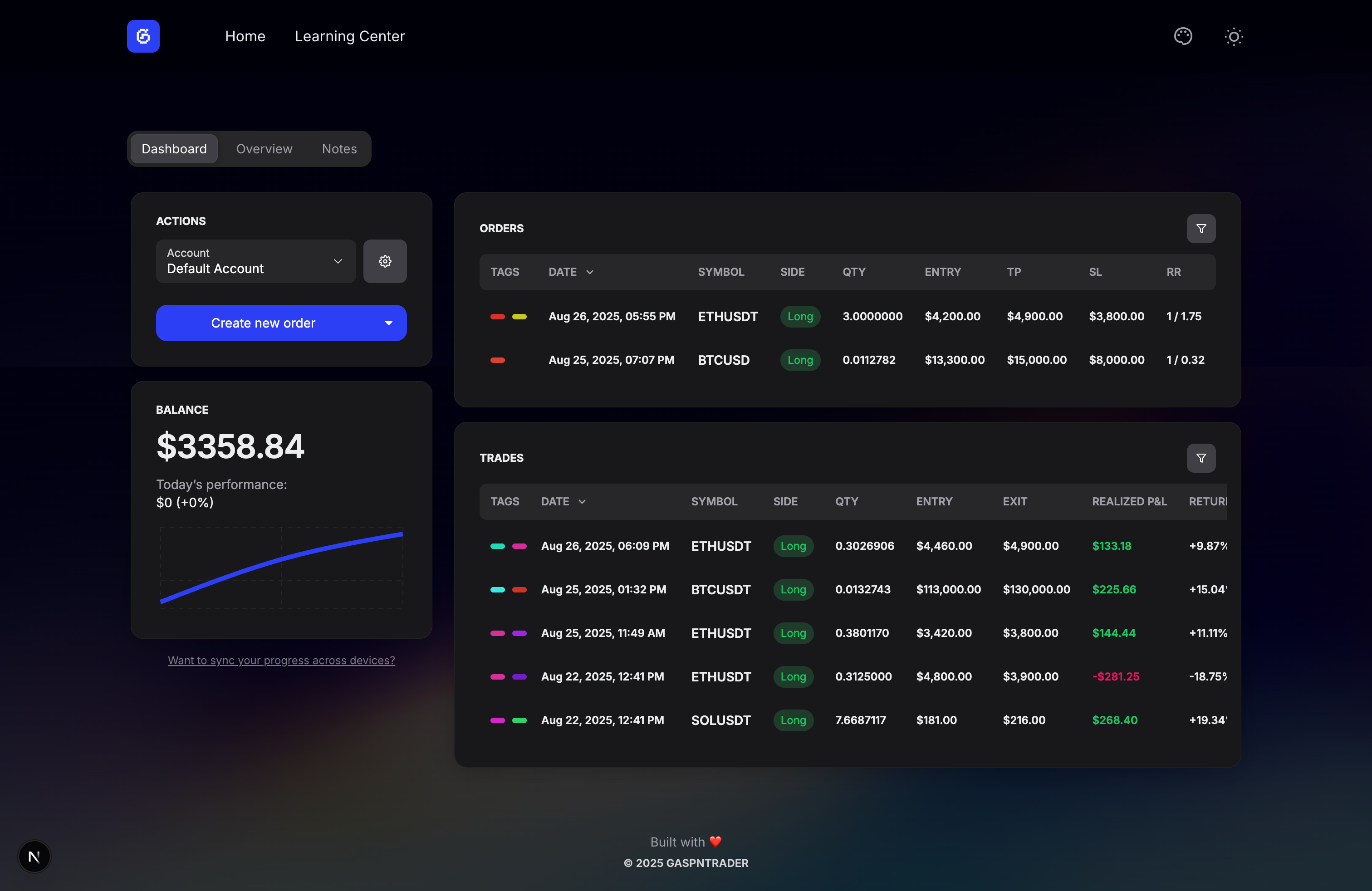
Automate the boring parts: auto-sync positions from any broker without leaving GASPNTRADER using our AI-powered sync.
Common Mistakes to Avoid
- Sizing by feeling instead of a formula.
- Revenge trading after hitting a daily stop.
- Optimizing for win rate instead of expectancy.
- No journal, so you don't know what to fix.
FAQ
What does the 90-90-90 rule mean?
It's trader shorthand for the claim that 90% of new traders lose 90% of their capital within 90 days. It's an industry adage, not a documented statistic -no study pins down those exact numbers. But the behaviors behind it (oversizing, no plan, no journal) are real and fixable.
Is the 90-90-90 rule true?
Not as a universal fact - but it's a useful warning. New traders who over-risk and don't measure tend to churn out quickly. Your defense is risk management + journaling. For a concrete risk framework, see the 3-5-7 rule in trading.
Do 90% of options really expire worthless?
No. Many options are closed before expiration. Don't base a strategy on a false premise. Evaluate max loss, tail risk, and expected value.
Is the 90% rule the same in stocks and forex?
The adage is the same; the speed differs. Higher leverage and higher decision frequency (common in forex and short-dated options) compress the timeline, while slower, less-leveraged stock trading gives you more room to learn between mistakes. The defenses -fixed risk per trade, deliberate position sizing, journaling -are identical in every market.
What win rate do you need to beat the 90% rule?
There's no fixed number -it depends on your reward-to-risk. The break-even win rate is 1 / (1 + R): at 1:1 you need 50%, at 2:1 about 33.3%, at 3:1 just 25%. Beating the adage is less about winning often and more about keeping losers structurally smaller than winners.
Can I "beat" the 90% rule?
Yes -by staying small, being selective, and measuring. Longevity plus data-driven iteration is the real edge.
Related Tools and Guides
- Risk-Reward Ratio Calculator - Calculate your R:R and breakeven win rate
- Best Day Trading Journal in 2026 - Choose the right journal to track your trades
- What Is the 3-5-7 Rule in Trading? - Another practical risk management framework
- Leverage Calculator - Understand your leverage exposure before trading